


Artificial intelligence has moved well beyond the experimentation stage in government. Across federal, state, and local agencies, leaders are increasingly focused on how to deploy AI responsibly, govern it effectively, and scale it to improve both employee productivity and resident experiences. But while enthusiasm for AI is growing, many agencies are discovering that implementation is more complicated than simply choosing the right tool.
A new survey from Granicus, Carahsoft, and GovLoop, which included more than 100 respondents, reveals that agencies don’t have a use-case problem: they have an execution problem. Read on for insights from that survey and what they mean for public service moving forward.
Government Employees See AI’s Potential

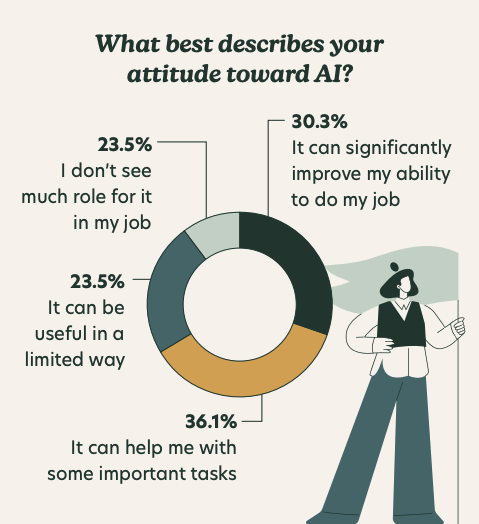
This new research found a generally positive outlook toward AI among public-sector employees. More than one-third (36.1%) of respondents said AI can help them with important tasks, while another 30.3% believe it can significantly improve their ability to do their jobs. At the same time, 23.5% see AI as useful in a limited way, and 23.5% don’t see a substantial role for it in their work.
That mix of optimism and caution reflects where many agencies are today: interested in AI’s possibilities but still working through the practical realities of adoption.
Why Are Agencies Investing in AI?

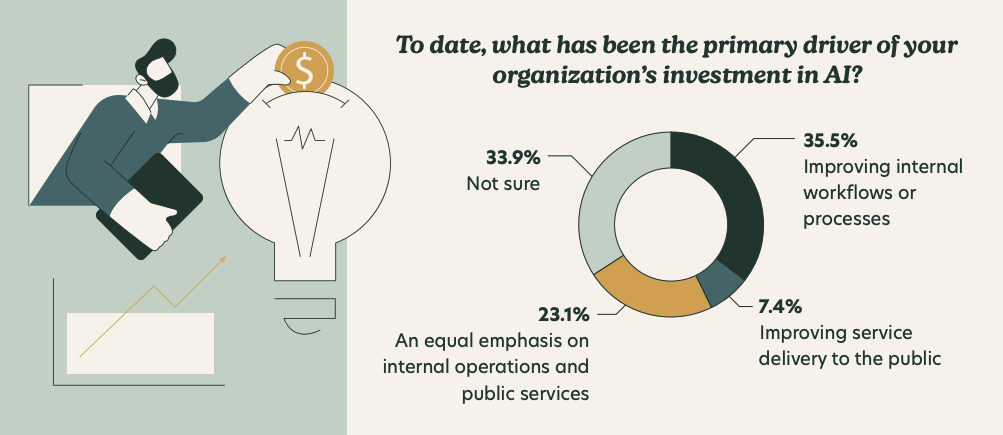
When asked about the primary driver behind AI investments, agencies revealed a balanced approach.
The top response was improving internal workflows and processes (35.5%), followed closely by an equal emphasis on enhancing both operations and public services (23.1%). Only 7.4% said improving service delivery to the public was the sole driver. These findings suggest that agencies increasingly view AI as a business transformation initiative rather than simply a resident-facing technology project. The goal is not just better services, but more efficient organizations.
Residents Are Raising Expectations

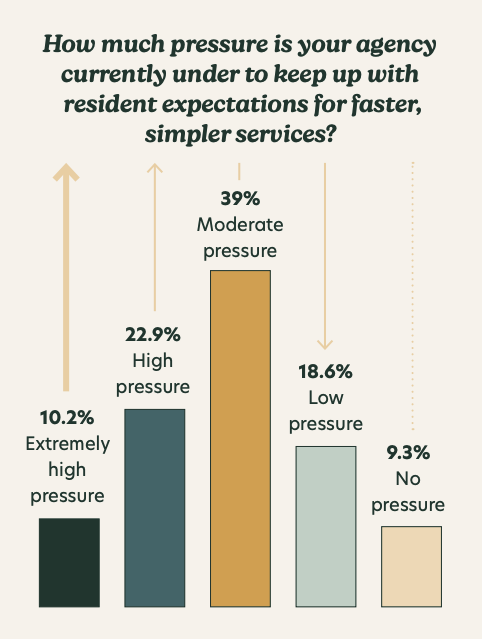
Perhaps one of the most important findings in the report is the pressure agencies feel to deliver faster and simpler services. More than 62% of respondents reported feeling moderate to high pressure to meet resident expectations:
- 39% reported moderate pressure.
- 22.9% reported high pressure.
- 10.2% reported extremely high pressure.
As residents become accustomed to seamless digital experiences in the private sector, government agencies are under growing pressure to provide the same level of convenience and responsiveness.
The Most Promising AI Use Cases for Resident Experience

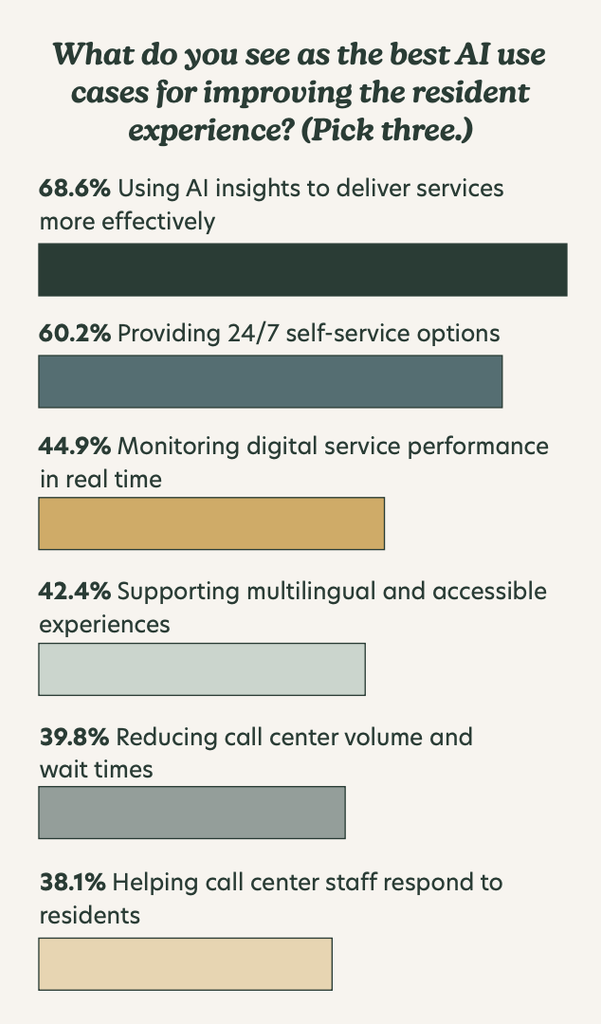
Respondents identified several high-value opportunities where AI can have an immediate impact on service delivery. The leading use cases include:
- 68.6% believe AI can help deliver services more effectively.
- 60.2% see value in providing 24/7 self-service options.
- 44.9% support using AI to monitor digital service performance in real time.
- 42.4% see AI improving multilingual and accessible experiences.
- 39.8% believe AI can reduce call center volume and wait times.
- 38.1% say AI can help staff respond more effectively to residents.
These findings highlight a clear trend: agencies are looking beyond automation and toward AI-powered experiences that make government more accessible, responsive, and effective.
The Real Barriers to Success
While interest in AI is strong, agencies continue to face challenges around security, workforce readiness, governance, and fragmented data systems. In fact, only 16.7% of respondents cited a lack of compelling AI use cases as a concern. The opportunity is there. The challenge now is creating the organizational foundation needed to scale AI responsibly.
Download the Full Report
While AI adoption across government is still evolving, one thing is clear: the agencies that succeed will be those that combine innovation with strong governance, trusted data, and organizational readiness. Our new report, The State of AI in Government:
Adoption, Barriers and What Comes Next, offers deeper insights into these adoption trends, implementation challenges, government priorities, and practical AI use cases that can deliver measurable results.
Download it now to explore the data, survey findings, and expert recommendations shaping the future of AI in government.