



Siloed data can lead to mistakes and poor decision-making; as AI proliferates, that fragmentation can increase the likelihood of unreliable AI outcomes. To make data more accessible — and more useful — agencies need a systematic approach that addresses technology, governance and workforce education. The name for this is data democracy.
So, What Is Data Democratization?
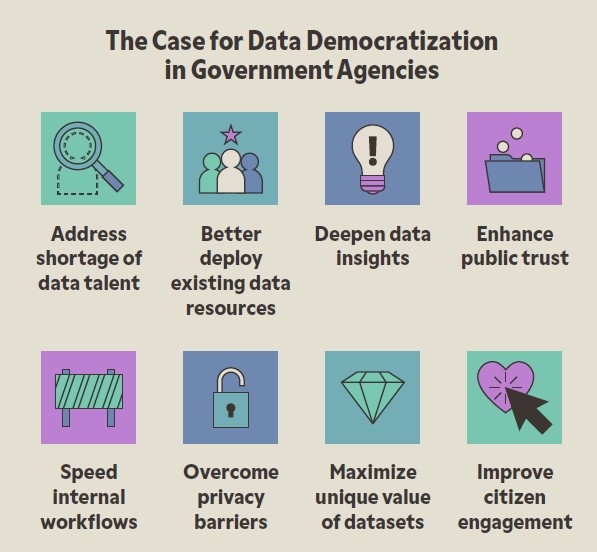
In short, it’s an environment in which an organization’s data is available in a digital format and understandable to all end users, including nonspecialists. Democratization’s overall goal is to break down the data silos that create errors, inefficiencies, excess costs and questionable data integrity.

Data integration weaves together modern analytics and legacy systems, and vast and small datasets — to tell a combined story.
How to Be Data Democratic
1 — Define the program objectives. Identify what the organization hopes to gain, problems it aims solve, how its data assets/mission will align, etc.
2 — Assess the data assets. Conduct a full, detailed survey of data assets, from the biggest databases to renegade spreadsheets.
3 — Create data flows for all critical processes. Think about how data flows through the organization and how it should flow, ideally.
4 — Establish standards. Establish data governance standards for all departments, which often means appointing a data governance officer.
5 — Begin organizational data transformation. Start getting new data management systems in place, upgrading/building new data storage and reengineering mechanisms to move data between systems.
6 — Train and empower employees. Require workers to have the right level of data literacy, have data leaders push adoption, and make data literacy part of the hiring process.
Data Literacy Skills for Lasting Insights
In a data-democratic organization, accessing info is just the first step. Employees also are data literate. They can:
→ Think critically about information data analysis yields
→ Interpret data visualizations, such as graphs and charts
→ Know what data is appropriate to use for a particular purpose
→ Understand data analytics tools and methods, and know when and where to use them
→ Recognize when data is misrepresented or used misleadingly
→ Communicate information about data to people who are not data literate, such as through storytelling
AI and Data Democracy
AI tools, including Gen AI and agentic AI, are supercharging nonspecialists’ ability to access and quickly unlock the value of organizational data. AI-driven platforms connect and weave together previously discrete data sources. Unified dashboards help non-IT teams take real-time action, without inter-departmental delays. And all of this encourages innovation, accuracy and better decision-making.
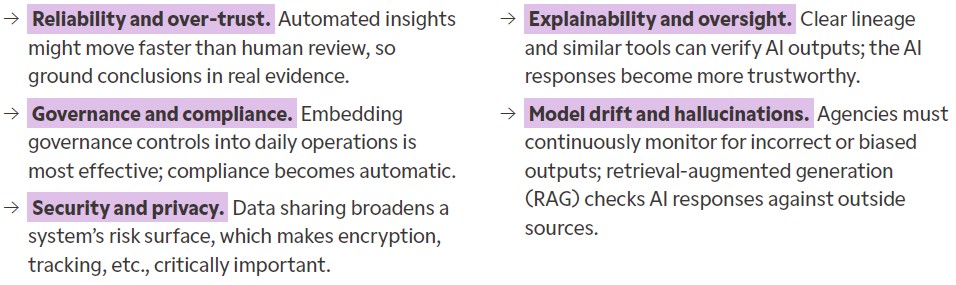
However, agencies need guardrails to protect against:

A version of this article appears in our new guide “How to Make Gov Data Accessible and AI-Ready.” Download the guide here for more practical, proven ways to unlock data insights.