
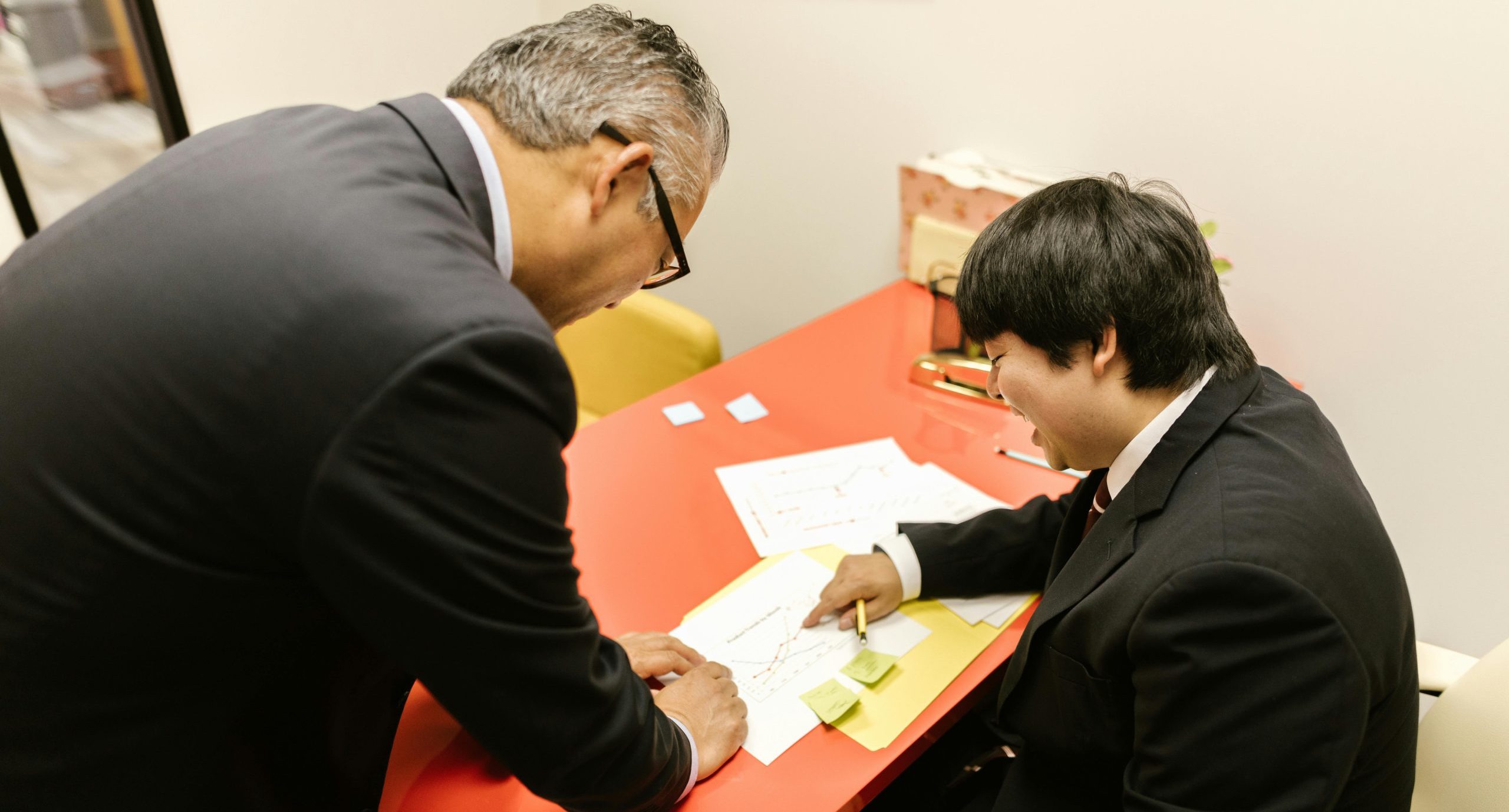

What would you do if you are supervising an employee, who you think has a disability but who has not disclosed it to you, and that employee is having problems at work? Would you keep quiet, thinking that it would be better if the other person makes a disclosure? You might be reluctant to say something, wanting to avoid an awkward conversation.
Be aware that a court may find that you must act in such a situation. In its decision in the Brady v. Wal-Mart Stores, Inc., the court found:

“We therefore hold that an employer has a duty reasonably to accommodate an employee’s disability if the disability is obvious — which is to say, if the employer knew or reasonably should have known that the employee was disabled.”
You might wonder what to do if your employee with a disability has not requested an accommodation. You might think that you might offend them and/or risk a lawsuit if you start the interactive process of reasonable accommodations without their initiation, as the process usually begins when an employee requests a reasonable accommodation. The employee with a disability may not even think or know they have a disability, as is the case especially when some people are diagnosed with autism when they are adults.
Even if your employee with a disability has not disclosed or requested an accommodation, you must still take charge and begin the accommodations process. This conversation may be difficult, but it still should occur.
The fact that your employee hasn’t requested an accommodation isn’t always an adequate defense for not providing one. Wal-Mart argued that in Brady v. Wal-Mart, and lost the case. You may have the affirmative obligation to start the interactive accommodation process.
How should you begin this process when an employee has not disclosed and has not requested an accommodation?
- If your office has a human resources department (HR), contact it for guidance.
- Request to meet with your employee in private.
- During that conversation, ask about effects on job performance, not on the disability. In other words, do not ask if the employee has a disability and what that disability is.
- Be prepared for some awkwardness and/or silence, but know this conversation may be essential and mandated by law.
- Follow your workplace’s reasonable accommodation process (if your workplace has one).
- Discuss and implement reasonable accommodations.
- Keep this conversation and subsequent discussions confidential.
What happens if you perceive your employee to have a disability? Your perception may put your employee under the protection of the Americans with Disabilities Act (ADA). According to the ADA,
“A person with a disability is someone who:
- has a physical or mental impairment that substantially limits one or more major life activities,
- has a history or record of such an impairment (such as cancer that is in remission), or
- is perceived by others as having such an impairment (such as a person who has scars from a severe burn).”
What if an employee who is covered by the ADA asks for a workplace adjustment but does not say “reasonable accommodation?” You must participate in the interactive process, as a worker does not have to mention the ADA or say the words “reasonable accommodation” when requesting a reasonable accommodation. The worker is only obligated to say that they need a change in order to do their job due to limitations that result from a disability.
Follow the law and accommodate workers with disabilities. If not, your employer could be involved in a time-consuming and costly lawsuit.
Do not let concerns about disabilities get in the way of hiring people with disabilities. If you reject a job candidate on the basis of their disabilities alone, that’s breaking the law. In addition, you would miss out on the immense benefits of hiring individuals with disabilities.
Treat your employees with disabilities legally. All would benefit.
Miriam Edelman, MPA, MSSW, is a Washington, D.C.-based policy professional. Her experience includes policy work for Congress. Miriam’s undergraduate degree is from Barnard College, Columbia University, with majors in political science and urban studies. She has a master’s in public administration from Cornell University, where she was inducted into the national honorary society for public administration. She has a master’s of science in social work (focusing on policy) from Columbia University. She is a commissioner of the DC Commission on Persons with Disabilities. Miriam aims to continue her career in public service. She is especially interested in democracy, civic education, District of Columbia autonomy, diversity, health policy, women’s issues, and disabilities.



Leave a Reply
You must be logged in to post a comment.