How One County Found and Fixed Dangerous Sidewalk Gaps
Manatee County, Florida, used GIS to turn scattered sidewalk data into a shared inventory and planning system, helping prioritize improvement projects.


Manatee County, Florida, used GIS to turn scattered sidewalk data into a shared inventory and planning system, helping prioritize improvement projects.
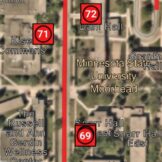
Information silos and disconnected workflows made it difficult for teams to identify needs, coordinate repairs, and manage key administrative workflows.

Using geolocation data, the Baltimore Police Department has transformed how it anticipates, responds to, and prevents crime — by providing integrated, spatial, timely data.

Rancho Mirage uses GIS to uncover wireless coverage gaps. The city’s maps of cellular performance helped residents understand service quality, guide infrastructure planning, and accelerate collaboration with wireless carriers to expand reliable connectivity across a fast-growing desert resort community.

Tallahassee – Leon County, Florida, punches above its weight by turning an experiment into a nationally recognized model for municipal AI innovation.

Using GIS along with AI technology, Houston has successfully digitally transformed its public works system for infrastructure management.

To advocate for healthy, safe and vibrant communities, the Institute for Public Strategies created a five-prong strategy, all of which use GIS to achieve efficiency and effectiveness.
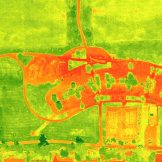
Salem, Oregon’s drones-as-a-service program supports multiple city departments, enhancing operations through high-resolution imagery.
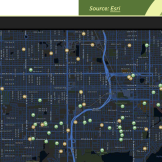
Agencies are using data to boost outcomes. Learn how St. Petersburg, Florida’s police department used data mapping to help fight crime.
GIS and public health go hand-in-hand in creating healthy and safe communities. Public health professionals can use a number of basic GIS tools to enhance their work.