

Ergonomics emerged in the early 1900s with the goal of fitting jobs to people by addressing workplace factors that contribute to physical safety and productivity. Many advances came from this work, including:
- The identification of risk factors like posture, repetitive motion, lifting and exposure to hazardous materials that we can mitigate with tools, machines and protective equipment
- Better lighting and visibility, adjustable workstations and mechanical support tools
- A shift from injury treatment to prevention
- The optimization of tools and machines to work with humans in ways that maximize the balance of efficiency, effectiveness, quality and safety

As a result of these advances, workplaces are well-engineered to accommodate the physical demands of our jobs. The nature of work has changed, however, and a growing number of us are not compensated for physical labor. We don’t manipulate objects; we manipulate data, information, decisions and analyses generated by software packages, algorithms and machines built on artificial intelligence. This creates a whole new class of issues that need to be solved for, including:
Attention Fragmentation — Modern workers simultaneously contend with email, instant messaging, dashboards, alerts, notifications, multiple open applications and tabs, AI assistants, social interruptions — and with that comes a continuous decision-making loop regarding what we’ll pay attention to right now. How do we engineer a workplace that helps us distinguish important signals from noise, protects attention and facilitates a rapid recovery from interruptions?
The “Always On” Phenomenon — Many manual laborers have a natural stopping point when they leave their worksite. Cognitive labor is connected to our devices, which rarely leave our side, and that means there is always an opportunity to check one more message, monitor one more dashboard, or answer one more request. Many workplaces lack strong mechanisms for cognitive recovery, uninterrupted work periods and meaningful stopping points.
AI as a Modern Human-Machine Interface — Cognition is now distributed between humans and AI the way that machines redistributed physical labor in factories. Humans are producing novel thinking less and evaluating or supervising machine-generated thinking more. How can work be engineered to make it easier to detect subtle errors, missing context, biased outputs and overconfident conclusions? How do we maintain adequate knowledge and skill to engage in “out of the loop performance” when decision support tools like AI are malfunctioning or inaccessible to us?
The Cognitive Delegation Dilemma — In short, this dilemma pertains to the parts of thinking that ought to be delegated to machines or retained by humans. Technology can support us with memory (search engines), calculations (statistical software), navigation (mapping applications), pattern detection (machine learning), and many other cognitive functions. So what’s the optimal positioning of humans and our cognitive capacities relative to these rapidly improving capabilities?
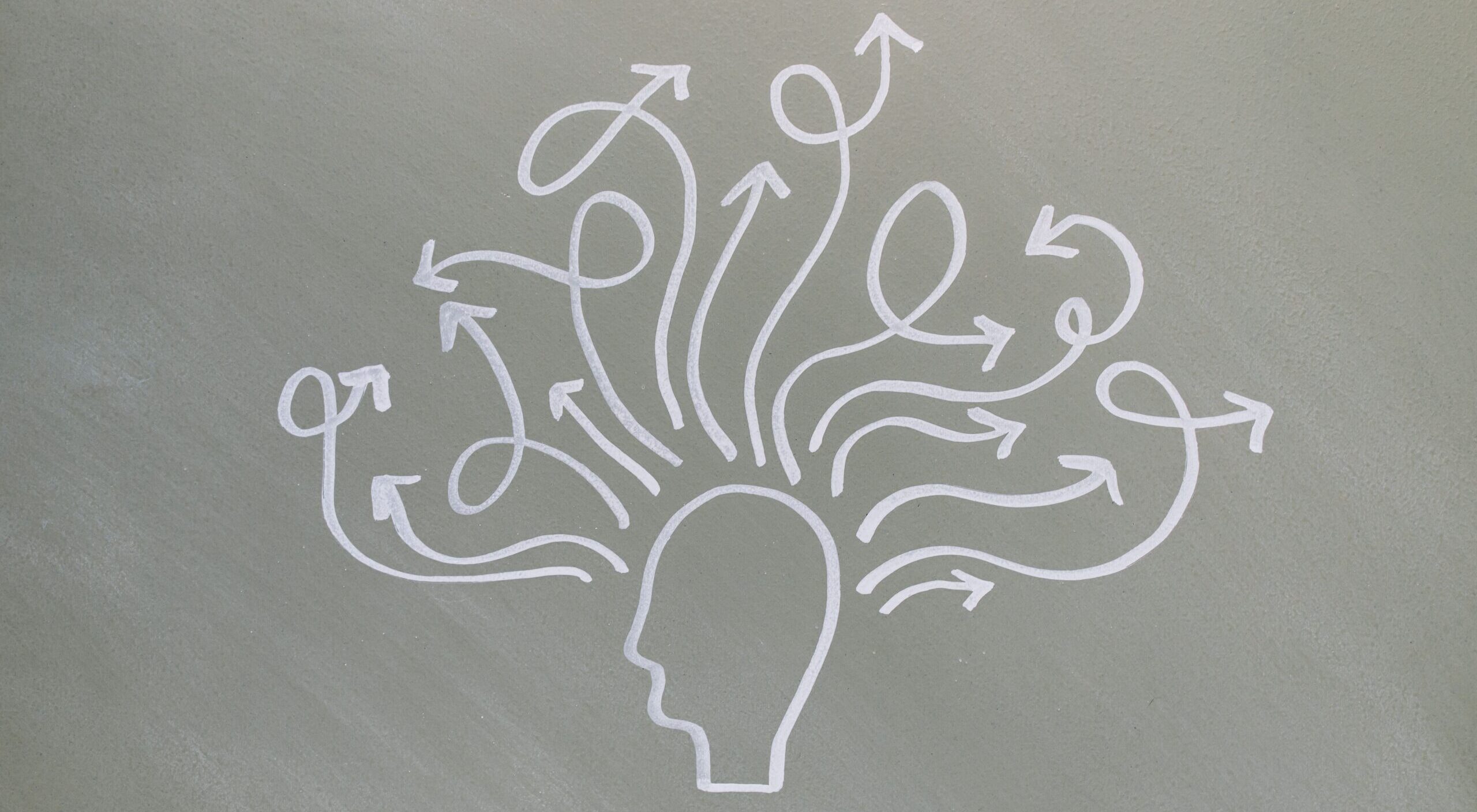
Going to work with our brains creates new demands and opportunities to engineer the workplace. Think of it as cognitive ergonomics — or efforts to engineer our jobs around the way people pay attention, think, decide, remember, evaluate and learn.
We have yet to develop a strong and scalable model for the “cognitive workplace,” which is somewhat surprising given the amount of time we have been working in the climate of the digital revolution. Nevertheless, the field of ergonomics gives us a roadmap and goals with clear benefits, such as:
- Reducing excessive or less than optimal searching
- Putting information where it’s needed, how it’s needed, when it’s needed
- Optimizing our cognitive workloads and making them sustainable
- Adapting information to accommodate how we process things
- Preventing mistakes, biases and misunderstandings
- Enhancing our consumption and supervision of generated information
- Positioning human resources where they add optimal, unique value
It’s time to invest in the exploration, the experimentation, and the incremental continuous improvements that can bring about these benefits and a workplace where our minds (and by extension, every part of us we bring to work) can thrive.
Ernest currently serves as a Personnel Research Psychologist within the Chief Human Capital Office of the US Department of Housing and Urban Development (HUD). He earned his Ph.D. in industrial-organizational psychology from the University of Akron in 2016. Over the last 20 years, he has worked in for-profit, non-profit, and government settings while holding a variety of individual contributor and leadership roles. His areas of expertise and experience include assessment for hire and development, leadership development, employee engagement, performance management, and organizational change and transformation.



Leave a Reply
You must be logged in to post a comment.