
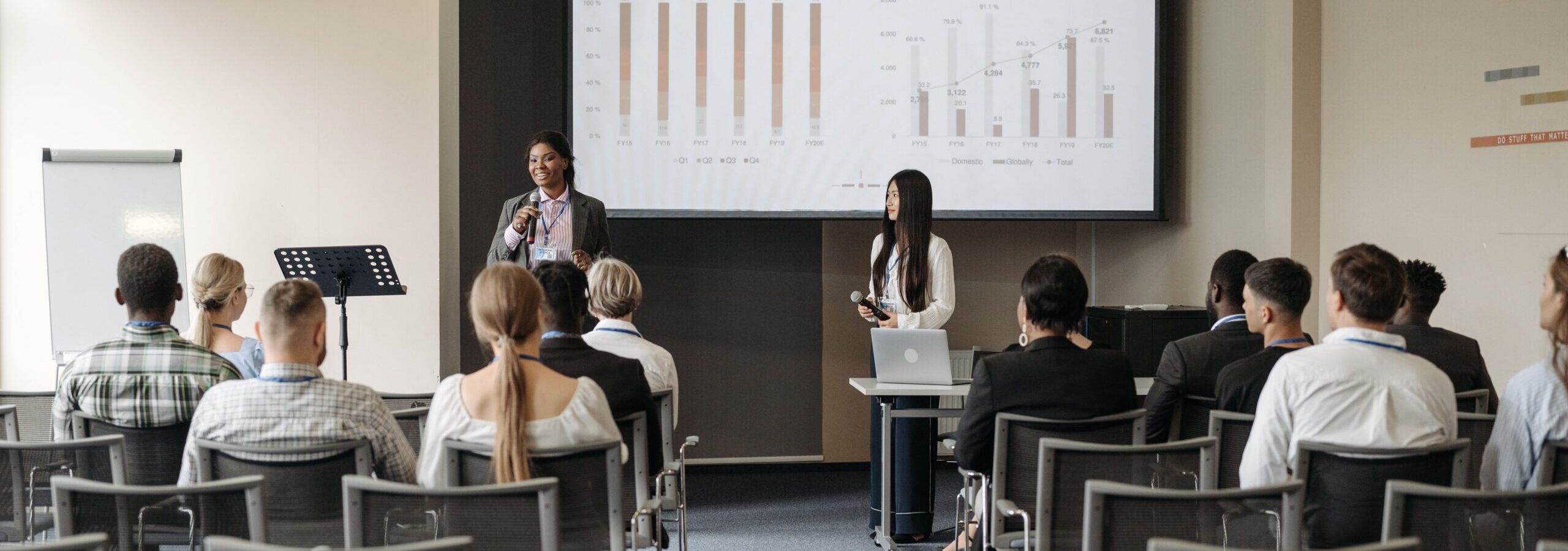

Government agencies rely heavily on subject matter experts (SMEs). These individuals possess deep technical knowledge, years of experience, and valuable institutional insights that help organizations accomplish their missions. They understand the policies, processes, systems, and realities of the work better than almost anyone else.

As agencies work to onboard new employees, transfer knowledge, and build workforce capability, SMEs are often asked to train others. There is just one challenge.
Being an expert and being an effective trainer are not the same thing.
In my first article in this series, I explored how training is often disconnected from workplace performance outcomes. In the second, I discussed the importance of learning transfer and ensuring that learning extends beyond the classroom. In the third article, I examined why government leaders need human-centered success skills to lead today’s workforce effectively.
This article’s challenge focuses on another common obstacle to effective workforce development: Many subject matter experts are expected to teach without support. As a result, training can become overloaded with information, low on engagement, and difficult for learners to apply.
The issue is not a lack of expertise. The issue is that most experts have never been taught how to facilitate learning.
Expertise and Instruction Are Different Skill Sets
Subject matter experts are often selected to teach because they know the content. That makes sense. However, knowing something and teaching it effectively require different competencies. Experts frequently:
- assume learners have more background knowledge than they actually do
- provide too much information at once
- focus on what is important to the expert rather than what is important to the learner
- rely heavily on lectures and presentations
- struggle to determine what learners truly need to know versus what is simply nice to know
Experts can unintentionally overwhelm learners without realizing it. The result is often information transfer without meaningful learning.
The Curse of Knowledge
One of the biggest challenges SMEs face is something learning professionals often call the “curse of knowledge.” Once people become highly skilled in a subject, it can be difficult to remember what it was like not to know it. Tasks that seem simple or obvious to an expert may confuse or intimidate a new employee.
As a result, experts may skip critical context, use unfamiliar terminology, or move through concepts too quickly. The learners are left trying to connect the dots on their own.
Effective trainers recognize where learners are starting and help them build understanding step by step.
Information Is not the Same as Learning
Many government training programs are information-dense. Slides are packed with content. Policies are explained in detail and processes are reviewed thoroughly. Yet learners often leave wondering: “What am I supposed to do with all of this?”
Learning occurs when people can connect information to action. Employees need opportunities to:
- practice new skills
- discuss real-world scenarios
- ask questions
- solve problems
- receive feedback
Adults learn best when learning feels relevant, practical, and immediately applicable to their work.
Facilitation Matters
Strong trainers do more than present information. They facilitate learning, create opportunities for participation, and encourage discussion. They ask thoughtful questions. They help learners discover meaning and application rather than simply delivering content.
The goal is not to demonstrate how much the trainer knows; it is to help learners succeed. That shift in mindset can dramatically improve learning outcomes.
Supporting Subject Matter Experts
Organizations can significantly improve workforce development efforts by better preparing SMEs for their training responsibilities. This does not require turning every expert into a professional instructional designer. However, it does require providing support.
Agencies can help SMEs by offering:
- train-the-trainer programs
- facilitation skills development
- instructional design guidance
- coaching and mentoring
- learner engagement techniques
- tools for creating more interactive learning experiences
When experts learn how to teach effectively, their knowledge becomes far more valuable to the organization.
Building Learning That Sticks
Government agencies face increasing pressure to transfer knowledge, accelerate onboarding, prepare future leaders, and sustain workforce capability. Subject matter experts are essential to those efforts, but expertise alone is not enough.
Organizations that invest in helping SMEs become effective facilitators create learning experiences that are more engaging, practical, and likely to influence workplace performance. Great expertise is valuable. Combined with great instruction, it is transformational.
In my next article, I will explore another challenge facing government workforce development: why virtual learning fatigue continues to impact learner engagement and what organizations can do to create more meaningful virtual learning experiences.
Deadra Welcome is the Founder and Principal Consultant of Concerning Learning LLC., where she elevates workplace culture by focusing on team cohesion, diversity and inclusion, and leadership development. Using a unique blend of instructional design, facilitation, and coaching techniques, Deadra creates tailored solutions for improved organizational performance. Using her 27 years of federal government service and nearly 30 years in the culture and performance industry, she strives to make learning extraordinary and create spaces where everyone belongs and thrives.



Leave a Reply
You must be logged in to post a comment.