How Can Agencies Mitigate Risks of Using AI?
As artificial intelligence becomes more prevalent, governments are attempting to control its risks through internal guidance and legislation. Here’s where those efforts stand.


As artificial intelligence becomes more prevalent, governments are attempting to control its risks through internal guidance and legislation. Here’s where those efforts stand.

Across government, innovation is happening at the edge, leveraging cloud, artificial intelligence (AI), machine learning (ML) and related technologies.

AI technology has fascinating prospects for society, but there also exists a spectrum of potential negative and unconventional outcomes, including AI-driven phishing attacks.
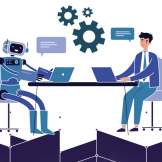
Getting used to AI can be an uncertain journey. Will it raise the quality and speed of your output? Will it expand the scope of your job, or put it at risk? Find out what an expert thinks.

If an agency wants to transform how it uses data, it needs to reimagine three core pillars of its data ecosystem: people, processes and technology.

This playbook explains how a modernized approach to observability can help troubleshoot and remediate IT issues faster.
This resource discusses the benefits of automation and best practices for implementing this technology.

Governments can use AI and machine learning to enhance citizen experience and streamline overall operations.

Though more than 100 years separates the inception of the U.S. Airmail Service and the launch of ChatGPT, we can learn many lessons from the former when deciding how to use the latter.

With advanced networking technologies, such as artificial intelligence and machine learning, agencies can monitor their service areas in real-time and identify areas that need improvement.