Responding to the Challenges of Public Health Preparedness With GIS
Public health preparedness staff need a collection of foundational data, supported by GIS, on an enterprise platform, that is ready to go when a disaster strikes.

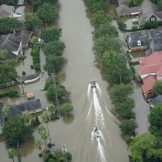
Public health preparedness staff need a collection of foundational data, supported by GIS, on an enterprise platform, that is ready to go when a disaster strikes.

Public health preparedness professionals are facing tight budgets at a time when disasters and emergencies are increasing. A recent online training discussed how organizations are using GIS to modernize their efforts.
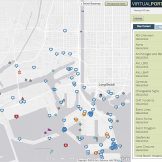
A connected government participates in the creation and maintenance of data and real-time information. They move away from creating siloed smart projects and set up a true real-time infrastructure that can ingest, collect and analyze real-time data.
In this post I am discussing geo-enabled enterprises. This spatial indexing of data not only creates a new data element to analyze but also allows the data to be visualized in a very intuitive way; as a map
This was the topic at hand during GovLoop’s recent online training, “Agencies Put GIS to Use in Real Time.” Two experts from Esri shared knowledge.

Cities, counties and states are already leveraging the power of GIS to combat opioid crises in their communities. Read these two case studies to learn how.

Now in its 21st year, Esri’s Federal GIS (FedGIS) Conference kicks off March 20-21. Open to all federal government agency workers, this event attracts 3,000 attendees and invites all to share their experience in collaborating, innovating, and connecting their work using spatial analytics technology.
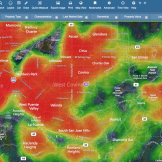
Detecting and responding to any type of infectious disease requires geographic accuracy along with the ability to track and gather data. A GIS platform allows you to visualize and analyze information layered onto a map in order to understand relationships, patterns and trends.

The role of geographic information systems (GIS) is obvious in many community emergencies, like wildfires, hurricanes or flooding. Borrowing from transferable workflows and decision support tools, state and local governments are applying these best practices to battle social inequities such as blight, opioid addiction and homelessness. These similarities do require a shift in organizational andRead… Read more »

The 4th Industrial Revolution can be described through current and developing systems as disruptive technologies such as robotics and drones, virtual reality and artificial intelligence and how they will change the way we work and live.