More Manageable Transportation With Agencywide Rideshare
In this video interview, Nick Brown with Uber discusses the public sector’s status-quo approach to providing transportation services and the benefits of a modern alternative.


In this video interview, Nick Brown with Uber discusses the public sector’s status-quo approach to providing transportation services and the benefits of a modern alternative.

As AI increasingly becomes an intermediary between government organizations and the public, the structure of information begins to matter as much as the content itself. It is not a shift in messaging — it is a shift in how data is read.

AI is embedded in government operations, and agencies need a proactive approach to data governance in order to mitigate risk — and foster trust.

As government organizations make greater use of AI, their privacy risks are expanding beyond traditional data protection. Critical infrastructure sectors must address new challenges related to data aggregation and accountability for AI-assisted decisions, among other concerns. To navigate this landscape successfully, organizations must enforce strong privacy protections to sustain innovation while maintaining public trust.

RDMA is a fascinating approach to “sharing memory” without having to burden a CPU. Learn why, and why AI data centers and cloud vendors use it.

In this video interview, Ben Caruso with HPE Networking explains how self-driving networks can transform how state and local agencies typically manage their systems.

AI offers enormous potential to help agencies and institutions work more effectively. But those benefits only materialize when AI is used within a framework of strong data governance.

Given the amount of data that we now generate, the term “Big Data” seems to be an insufficient description, especially since AI needs so much of it.

Critical decisions require analyzing massive volumes of data and strict compliance requirements. Agencies need help to speed up the process.
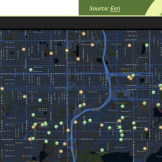
Agencies are using data to improve outcomes. Learn how St. Petersburg, Florida’s police department used data mapping to help fight crime.