How to Celebrate National Disability Employment Awareness Month — Part 1
National Disability Employment Awareness Month may be short-lived, but employees with disabilities must be treated fairly throughout the year.

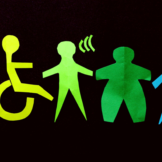
National Disability Employment Awareness Month may be short-lived, but employees with disabilities must be treated fairly throughout the year.

In recognition of Suicide Prevention Month, here are commonsense ways to develop an anti-bullying policy.

An organization becoming trauma-informed and navigating a leadership change has no steady ground to stand on. The work has to happen in motion.

Implementing hiring preferences for people with disabilities can benefit those individuals while also improving the government workforce.

In a recent GovLoop Supervisors CoP discussion, speaker Ria Balbos-Jordan explained how healthy conflict can actually be a good thing.

Learn about hiring approaches that help disabled individuals contribute their talents.

People with disabilities, and particularly autistic individuals, struggle with lower employment rates and incomes compared to people who are disability-free.

Even when people with disabilities have at least a college degree, they are employed much less frequently than people without disabilities with comparable education.

What if AI can be a beneficiary as well as a benefit? This article imagines what it might look like to manage AI agents as (Non-)Human Resources.

An initiative to consolidate the federal government’s more than 100 disparate HR systems is long overdue, but technology alone isn’t enough. This is a once-in-a-generation opportunity, says one Featured Contributor, to create a human-centered, AI-enabled federal HR system designed for current workforce challenges, not for administrative problems that troubled government in the past.